
Hiring teams are under pressure to move quickly while still making fair, well-informed decisions. A one way video interview platform can help by allowing candidates to record answers on their own time, while recruiters and hiring managers review those responses when it is convenient. However, the value of this technology depends heavily on the quality, security, and usability of the platform you choose.
TLDR: A reliable one way video interview platform should make hiring more efficient without weakening candidate experience, fairness, or data protection. Look for features such as customizable questions, strong security controls, structured evaluation tools, integrations, accessibility, and analytics. The best platform is not simply the one with the most features, but the one that supports a consistent, compliant, and respectful hiring process.
1. Simple Candidate Experience
The first feature to evaluate is the candidate experience. A one way video interview platform should be easy to access, easy to understand, and easy to use without technical support. Candidates may be applying from different devices, locations, and internet conditions, so the process should feel straightforward from the first invitation to the final submission.
Look for a platform that provides clear instructions, a clean interface, and a guided interview flow. Candidates should know how many questions they will answer, whether they have preparation time, how long each response can be, and whether they can re-record answers. Confusion at this stage can create unnecessary stress and may affect the quality of responses.
A serious hiring platform should also work well on both desktop and mobile devices. Mobile compatibility is especially important for hourly roles, frontline hiring, graduate recruitment, and international candidates. If candidates need to download complicated software or troubleshoot browser settings, completion rates may fall.

2. Customizable Interview Questions
Every role is different, and your interview platform should reflect that. A strong one way video interview tool allows recruiters to create custom question sets based on job requirements, seniority, department, location, or hiring stage.
Useful customization options may include:
- Video questions where a recruiter records the prompt.
- Text-based questions for clarity and consistency.
- Timed responses to keep answers focused.
- Practice questions to help candidates become comfortable.
- Written or multiple-choice questions for screening specific knowledge.
Customization is not only about convenience. It also supports a more structured hiring process. When each candidate receives the same core questions, hiring teams can compare responses more consistently and reduce the risk of informal or biased evaluation.
3. Structured Evaluation and Rating Tools
One of the most important features to look for is a structured evaluation system. Video interviews should not become a collection of subjective impressions. The platform should give hiring teams tools to assess candidates against defined criteria.
Effective evaluation features include rating scales, scorecards, competency categories, written feedback, and standardized review templates. For example, a sales role might include evaluation areas such as communication, objection handling, commercial awareness, and motivation. A technical support role might focus on troubleshooting approach, customer empathy, and clarity of explanation.
Structured evaluation helps teams make decisions based on job-related evidence. It also creates a more transparent audit trail, which can be important if hiring decisions are questioned later. For organizations that take compliance and fairness seriously, scorecards are not optional; they are essential.
4. Collaboration Features for Hiring Teams
Recruitment is rarely a one-person decision. Recruiters, hiring managers, department heads, and sometimes interview panels all need to share feedback. A good one way video interview platform should make collaboration efficient and controlled.
Look for features such as shared candidate profiles, reviewer permissions, internal comments, candidate shortlisting, and notification settings. Team members should be able to review interviews independently, leave notes, and compare evaluations without relying on long email threads or scattered spreadsheets.
At the same time, collaboration should be managed carefully. Not every user should have access to every candidate or every role. The platform should support role-based access so that sensitive candidate information remains visible only to the appropriate people.
5. Strong Data Security and Privacy Controls
Video interviews involve personal information, including a candidate’s image, voice, employment history, and potentially sensitive disclosures. Any platform you use must take security and privacy seriously.
Key security features to look for include:
- Encryption for data in transit and at rest.
- Secure user authentication, including single sign-on where appropriate.
- Permission controls to limit access by role or department.
- Data retention settings so interviews are not stored indefinitely.
- Compliance support for relevant privacy regulations such as GDPR or similar local requirements.
You should also ask vendors where data is stored, who can access it, how long it is retained, and how candidates can request deletion. A trustworthy provider should answer these questions clearly and provide documentation, not vague assurances.

6. Accessibility and Inclusive Design
An effective video interview platform should be accessible to as many candidates as possible. Accessibility is not only a legal or compliance consideration; it is also a matter of fairness and professional responsibility.
Consider whether the platform supports captions, screen readers, keyboard navigation, adjustable time limits, and alternative response formats where reasonable. Candidates with disabilities may need accommodations, and the system should make those accommodations possible without creating unnecessary friction.
Inclusive design also means using plain language, avoiding overly complex navigation, and ensuring that candidates understand what is expected. If the platform creates barriers for certain groups, it can reduce the diversity and quality of your applicant pool.
Before choosing a vendor, ask how accessibility has been tested and whether the platform follows recognized accessibility standards. A serious provider should be able to explain its approach in practical terms.
7. Integration with Your Existing Hiring Systems
A one way video interview platform should not operate in isolation. It should fit into your broader recruitment workflow, especially if your organization already uses an applicant tracking system, human resources information system, onboarding software, or calendar tools.
Integration can save significant administrative time. For example, candidate details can be transferred automatically from your applicant tracking system to the video interview platform. Interview invitations can be triggered from within your existing workflow. Completed interviews and evaluation scores can flow back into the candidate profile.
Good integrations reduce duplicate data entry, improve accuracy, and help recruiters maintain a single source of truth. If integrations are weak or unavailable, your team may end up manually moving information between systems, which increases the risk of errors and delays.
8. Configurable Branding and Communication
Candidates often form opinions about an employer based on the recruitment process. A video interview invitation that feels generic, unclear, or impersonal may weaken trust. A professional platform should allow you to configure branding and communication so the experience feels credible and aligned with your organization.
Useful branding and communication features include:
- Customizable invitation emails.
- Company logo and visual identity settings.
- Role-specific welcome messages.
- Clear instructions and expectations.
- Automated reminders for incomplete interviews.
However, branding should never come at the expense of clarity. Candidates need practical information: deadlines, estimated completion time, technical requirements, privacy notices, and support options. The tone should be professional, respectful, and transparent.
9. Reliable Technical Performance and Support
Technical reliability is fundamental. If candidates experience recording failures, slow uploads, poor video quality, or platform downtime, your hiring process can suffer. Worse, candidates may interpret technical problems as a sign that the employer is disorganized.
When evaluating platforms, consider uptime history, browser compatibility, upload performance, and support availability. The system should clearly confirm when an interview has been submitted successfully. It should also provide candidates with guidance if their connection is unstable or if camera and microphone permissions are not enabled.
Recruiters need support too. The platform should offer an intuitive dashboard, searchable candidate records, clear status tracking, and responsive vendor assistance. For larger organizations, onboarding support and training resources may be important. A feature-rich platform is of limited value if your team cannot use it confidently.
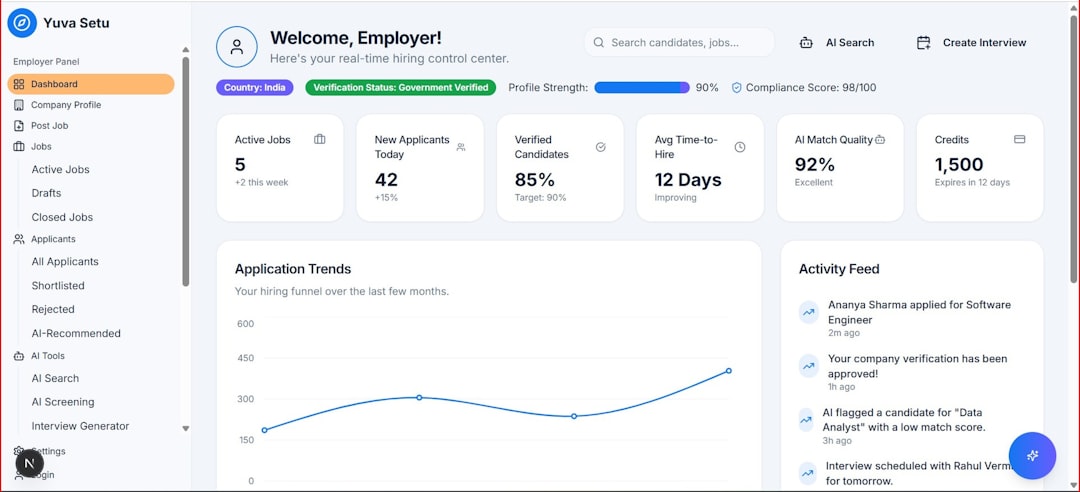
10. Reporting, Analytics, and Process Insights
Finally, look for reporting and analytics. A one way video interview platform should help you understand how your hiring process is performing, not just collect recordings.
Important metrics may include completion rates, average review time, candidate drop-off points, time to shortlist, reviewer activity, and stage conversion rates. These insights can help identify bottlenecks. For example, if many candidates start but do not complete interviews, your instructions may be unclear, your deadline may be too short, or the process may feel too demanding.
Analytics can also support workforce planning and recruitment quality improvements. Over time, you can compare which question sets produce the most useful responses, which roles experience delays, and where hiring teams may need additional guidance.
That said, analytics should be used responsibly. Be cautious with platforms that make broad automated judgments about candidate suitability without transparent, job-related reasoning. Human oversight remains important, particularly in hiring decisions that can significantly affect a person’s career.
Additional Considerations Before You Choose
Beyond individual features, consider how the platform fits your hiring philosophy. A one way video interview can be efficient, but it should not feel cold or transactional. Candidates are investing time and attention, often without direct interaction with a person. Your process should respect that effort.
Before signing a contract, ask practical questions:
- Can the platform support the number of roles and candidates you expect?
- How quickly can your team create and launch a new interview?
- What training will recruiters and hiring managers need?
- How does the provider handle candidate support requests?
- Can you export data if you later change systems?
- Does the pricing model match your hiring volume?
It is also wise to run a pilot before full implementation. Test the platform with a real hiring team and a limited candidate group. Review completion rates, feedback quality, technical issues, and candidate comments. A pilot can reveal whether the platform works in practice, not just in a sales demonstration.
Conclusion
A one way video interview platform can improve recruitment speed, consistency, and collaboration when chosen carefully. The most important features include a simple candidate experience, customizable questions, structured evaluation tools, secure data handling, accessibility, integrations, branding options, reliable performance, and meaningful analytics.
The right choice should support efficient hiring while preserving fairness, privacy, and professionalism. Treat the platform as part of your overall employer reputation and decision-making framework. When implemented thoughtfully, it can help hiring teams make better comparisons, reduce administrative burdens, and give candidates a clear, respectful way to present their experience.